In performance shops, you’ll hear the term “dyno” thrown around like confetti. Short for dynamometer, a dyno is essentially a giant scale for horsepower. But how does a dyno actually measure power? It isn’t just one-size-fits-all. Depending on whether you’re a manufacturer building an engine from scratch or an enthusiast looking to see how those new mods perform, the right measurement tool is crucial to get accurate data.
Engine Dynos: The Manufacturer’s Standard

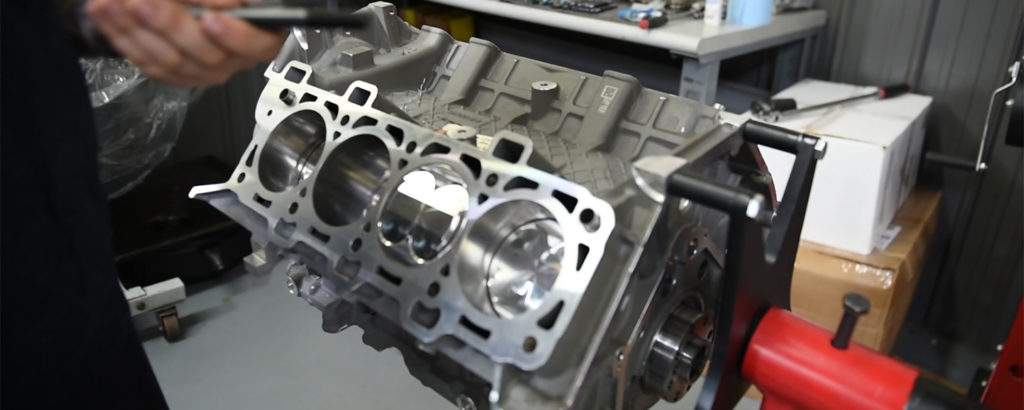
An engine dyno is the purest way to measure straight power. To use one, you have to physically remove the engine from the car and bolt it to a stationary stand. The dyno connects directly to the crankshaft.
- Pros: Engine dynos measure Brake Horsepower (BHP) without any loss from the transmission or tires. It’s incredibly precise for tuning an engine.
- Cons: It is a massive amount of work. Taking an engine out just for a test is impractical for most people.
- Who uses it: This is the playground of vehicle manufacturers and professional race engine builders.
Engine dynos provide the raw, unfiltered truth of an engine’s potential before the rest of the car gets in the way.
Chassis Dynos: The Professional Tuner’s Choice


The chassis dyno (or roller dyno) is what you see in most performance shops. The car is positioned on a set of heavy steel rollers built into the dyno. As it is driven on the rollers, the machine calculates power and torque based on how the car turns them.
- Pros: It is the most convenient method. You just strap the car down and go. It measures wheel horsepower (WHP), which is the actual power reaching the pavement.
- Cons: It is sensitive to variables such as tire pressure, strap tension, and how tightly the car is tied down. There are losses in the transmission and gearing, which are not perfectly efficient. So wheel horsepower will always be less than engine horsepower.
- Who uses it: This is the standard for the aftermarket tuning industry and enthusiasts.
Hub Dynos: The Precision Middle Ground

Hub dynos are a bit of a hybrid. Instead of using rollers, you remove the rear wheels and bolt the dyno units directly to the wheel hubs.
- Pros: There is zero tire slip, which can be an issue with high-horsepower cars on rollers. It’s safer because the car can’t accidentally launch itself off the dyno.
- Cons: It takes longer to set up than a chassis dyno because the wheels have to come off.
- Who uses it: Serious tuners who need extreme consistency without the hassle of pulling the whole engine.
While engine dynos measure potential, chassis and hub dynos measure reality – what actually hits the road.
Factors That Influence Dyno Readings
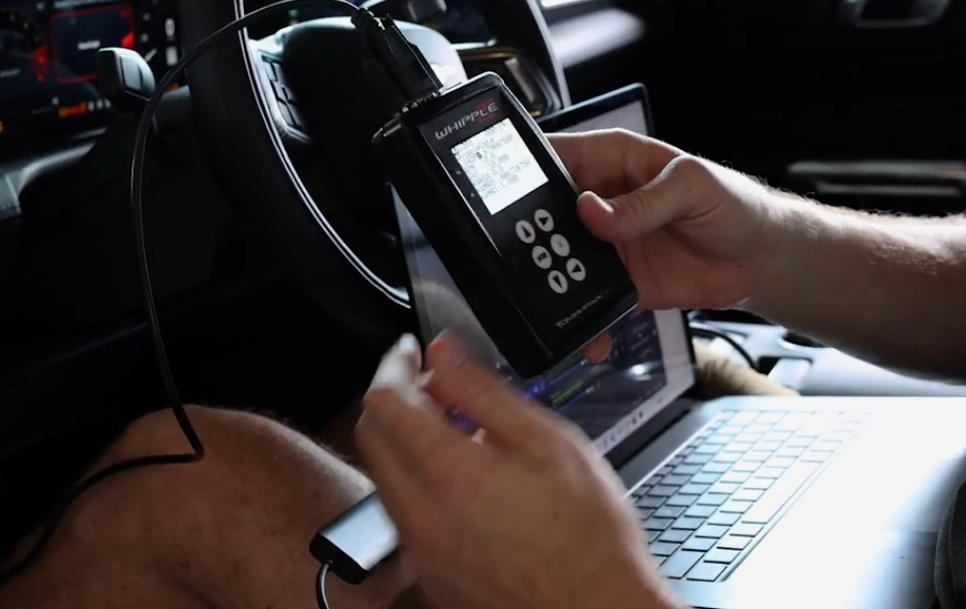

Dynos are great for both optimizing a vehicle’s performance and getting reliable data on how much power its making across the rev range. However, there are several factors that can affect the readings, and only experienced techs will be able to recognize the factors that can skew results:
- Ambient Weather: Engines crave cold, dry air. High heat, humidity, or high altitude reduce oxygen density, resulting in lower horsepower.
- Tire Pressure and Strapping: Low tire pressure creates rolling resistance, while strapping a car down too tightly increases friction against the rollers. Both act like a parasitic brake on your power.
- Heat Soak: Unlike the open road, a stationary car relies on shop fans. If airflow is insufficient, Intake Air Temperatures (IATs) spike, causing the ECU to pull timing and reduce power to protect the engine.
- Drivetrain Loss: Power is lost as it travels through the transmission and axles. Cold, thick gear oil or heavy aftermarket wheels require more energy to spin, which lowers the final reading at the wheels.
- Gear Selection: Most pulls are done in a 1:1 ratio gear. Testing in a lower gear multiplies torque, while a higher gear increases load and heat, both of which can skew the results.
VMP Performance Roller Dyno Testing


We do the majority of our dyno testing on a roller or chassis dyno. It uses inertia measuring and calculates power based on a known mass (the drum). This provides a real-world load that mimics the street.
We know the importance of getting repeatable results that incorporate the elements impacting performance in real-world use. You’re not going to run your setup in a lab, so testing performed in a controlled, lab-like environment is great for spec gathering, but not performance measurement. When you are testing a new supercharger kit or other performance products, you need to know that a 10-hp gain is usable, not just possible.
Additionally, because the wheels are spinning, you can use the dyno for a bit of driveline diagnostics. Problematic vibrations, tire balance issues, or strange noises often only occur when the wheels are turning.
Dyno pulls and datalog reviews are the deep-dive tools we use to capture insights into performance and to diagnose potential issues. When you accurately measure horsepower and torque in real time, you get a clear understanding of your actual power output.
VMP Performance Upgrades, Professionally Dyno Tested

At VMP Performance, we are enthusiasts, racers, engineers, and calibrators first – this allows us a very unique perspective and a whole lot of capabilities. Our professional dyno tuners understand how to get the best overall performance out of any build. Our dyno services and products include:
- Tuning Devices and Software
- Custom Email Tuning (Learn more about email tuning here)
- Dynojet Dyno Tuning
Whether you bring your vehicle to us and have us handle everything from start to finish, or you purchase online and have us ship everything, we are with you every step of the way through your build process. Check out our online catalog for everything from cold air intakes, Whipple supercharger kits, and tuning devices and services to throttle bodies, suspension components, and much more!
If you’re in the area, come by and talk to real enthusiasts who know performance products inside and out – we’re ready to help you max out your build – contact us today.
Sign Up For Our Newsletter
Stay up-to-date to get up-to-date information on new products, news, and VMP sales!