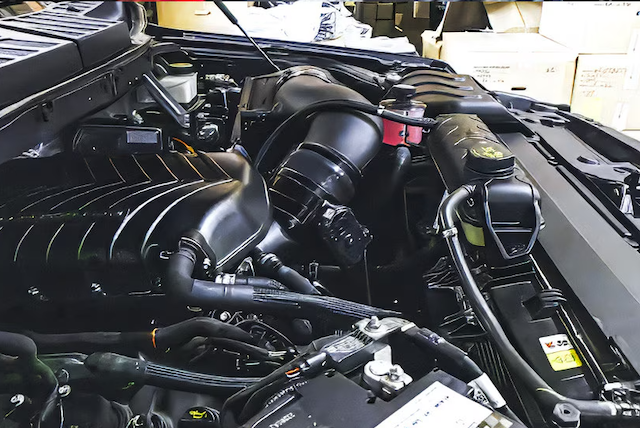
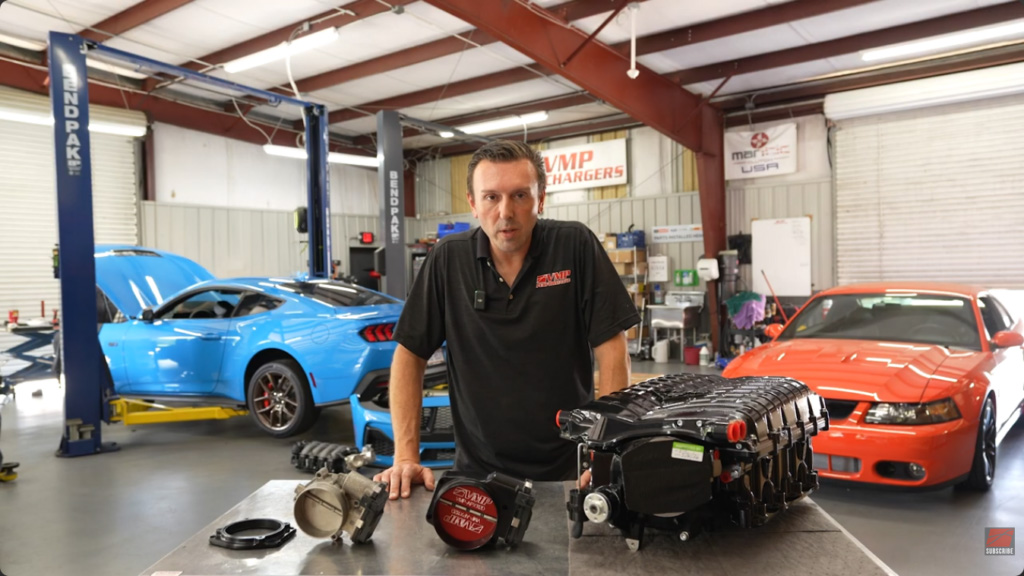
Making 700 wheel horsepower in a truck is a blast, and we’ve got a large selection of Supercharger Kits to help you get your Ford F-150 there. But what will happen when you try to launch it? Throwing massive torque at a factory leaf spring suspension is a recipe for wheel hop, broken parts, and terrible 60-foot times.
To get a truck to hook, you have to address the suspension. Read on to learn the mods that make the difference between setting a personal best and just spinning your wheels.
The Enemy of Grip: Axle Wrap and Wheel Hop
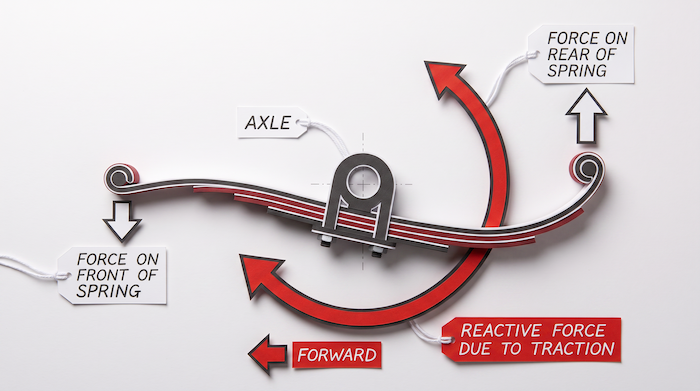
When you have a leaf spring suspension and you hit the gas hard, the rear axle wants to rotate backward in the opposite direction of your tires. This rotational force twists the axle housing, causing the leaf spring to bend into an “S” shape. In the racing and truck world, this is known as axle wrap.
As the suspension loads and the spring wraps up, the angle of your rear differential (the pinion angle) changes drastically. You can literally watch the pinion ‘walk up’ under heavy acceleration. Eventually, the leaf spring binds up and violently unloads its stored energy, breaking traction and slamming the tire back down to the pavement.
This violent, rapid-fire loading and unloading cycle is called wheel hop. Not only does it kill your launch, but the severe spikes in grip will shred your U-joints, driveshafts, and rear gears over time.
See exactly how this physics problem plays out, and how traction bars fix it, using this interactive simulator:
Locking It Down: Traction Bars and Suspension Upgrades
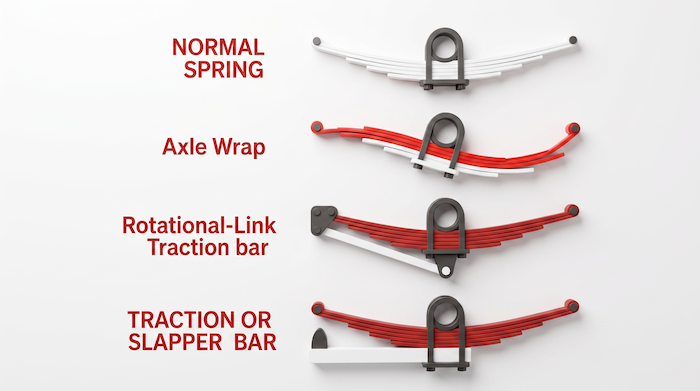
To keep a truck’s rear end planted, you can tackle the suspension from a few different angles. One option is a lowering kit which gets the center of gravity down. To handle the rapid weight transfer, you can also swap out the factory rear shocks for a set of high-performance shocks for better damping control.
The real magic for curing the wheel hop, however, usually comes from a set of traction bars, especially rotational-link traction bars.
By tying the rear axle housing to the front spring mount, traction bars act as a rigid brace. They stop the leaf spring from getting shorter and longer as it tries to bend, virtually eliminating that “S” shape. Instead of wasting your engine’s energy twisting the suspension and walking the pinion up, all that force is redirected exactly where you want it: pushing the truck forward.
Track-Proven Results
Check out the video above to see for yourself – you can watch an upgraded F-150 suspension tested on the same street surface both before and after the suspension upgrades. The difference was night and day. The proper setup will keep the rear differential in a relatively fixed position, eliminating the wheel hop experienced on the factory setup.
Ready to Hook Up?
The VMP crew are first and foremost enthusiasts, racers, engineers, and calibrators. We know firsthand what it takes to get a heavy, high-horsepower vehicle down the track safely and consistently because we build and race them ourselves. We are uniquely positioned to help you achieve your F-150 build goals, explore the links below to learn more about our Ford truck offerings:
If you’re dealing with traction issues or want your rig to grab better on the track, give our team a call. You’ll talk to real enthusiasts who know our products inside and out, and we can help you decide which supporting mods will complement your VMP Ford F-150 Supercharger, making it easier to reach your track or street goals.
Sign Up For Our Newsletter
Stay up-to-date to get up-to-date information on new products, news, and VMP sales!